← Back

The Wild Unknown Tarot review
Published by A thousand moons on
Here’s my hands-on review of The Wild Unknown Tarot: the artwork, guidebook, beginner-friendliness, and how it works for journaling.
The Wild Unknown is a minimalist, animal-based tarot deck by artist Kim Krans that trades the traditional imagery of Rider-Waite-Smith for symbolic creatures and beautifully hand-drawn cards.
It is wonderful for intuitive readers, but it can be a steep learning curve for beginners who want to learn traditional card meanings (at least it was for me! 😝)
It is one of my favorite decks, although I don’t use it often because I find it hard to read. Most of my favorite decks are collection items 😉
What makes this deck special?
The deck is entirely created and written by artist Kim Krans. She created the artwork as a way for her to escape a period of depression and anxiety. I find that decks that are 100% crafted by one single person (versus a deck created by a collaboration between a writer and an illustrator) have something special - it gives the deck a depth, an intensity and a spirit on its own.
How does it look?
I have the Harper Elixir edition. The box and the cards are very sturdy with a mat texture. It fits very well in the hands. It’s a pleasure to shuffle. The deck has 78 cards. The Major Arcana keep their traditional names, while the Minor Arcana use animals and plants instead of people (that’s why it gets tricky to read for beginners). See pictures below.
The artwork
The imagery is hand drawn, graphic, and detailed. Some cards are very colorful, some just black and white. Instead of Rider-Waite-Smith scenes, you get single animals or objects on muted backgrounds.
The guidebook
The companion book, The Wild Unknown Tarot Deck and Guidebook, gives each card a short meaning and some symbolism. I really like the book, the size and the way it’s hand written - Kim Krans has a very soft edge when it’s about describing each of the 78 cards archetypes.
Is it good for beginners?
It depends on how you like to learn.
Yes, if you want to read intuitively and build your own associations.
Less so, if you want to follow a standard course or book based on Rider-Waite-Smith. Many guides assume the RWS imagery, so you may find yourself translating. I don’t mind to have to guidebook beside each of my reading so it’s fine for me.
So, to make a long story short… :
Best for: experienced readers, intuitive readers, journalers, anyone who likes artsy, symbolic and nature imagery.
Skip it if: you want to learn classic tarot symbolism by looking at the cards, or you prefer human figures and clear storytelling scenes.
What works: the cards are calm and easy to photograph. Some readers find the sparse imagery lets their intuition lead, but I’m not that kind of reader…
What can frustrate: with few visual cues, the meanings are harder to recall at a glance, but the guidebook is a pleasure to read.
Here are a few pictures, feel free to ask if you have any question!
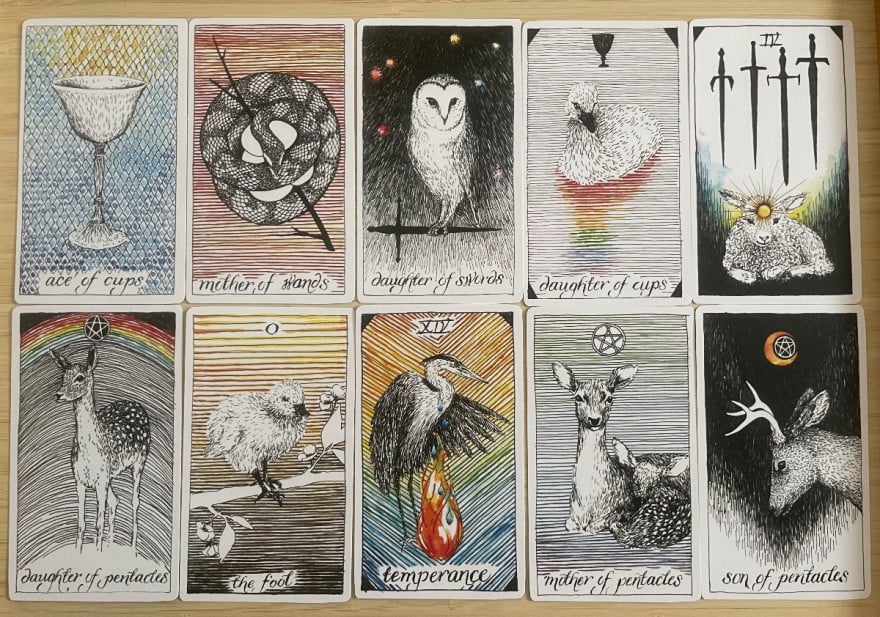
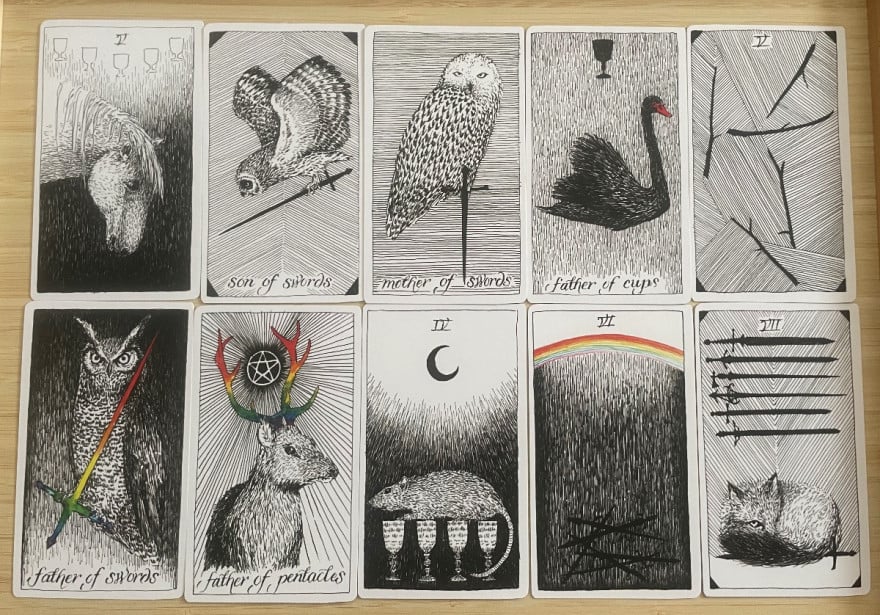
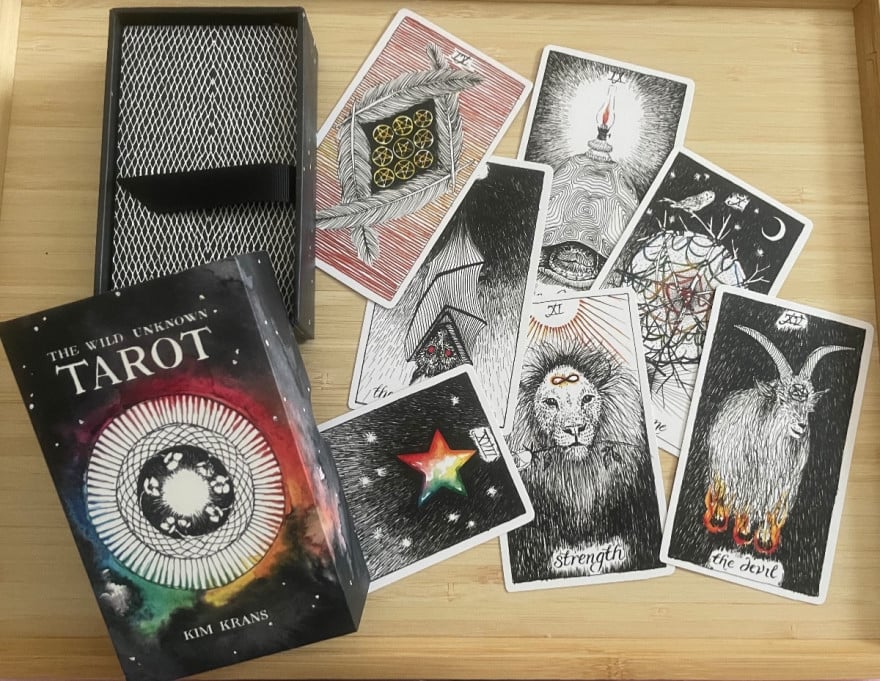
Deck:
The Wild Unknown Tarot
Category:
Joined Oct 2022
Hi and welcome to my tarot journal!
Here you will find my daily tarot + Lenormand readings, and my favorite decks and spreads.
I love tarot and oracles. I use the tarot since 2016 and started to learn Lenormand in 2020.
I love to do tarot readings by moonlight ? with my cats by my side… ✨🐈
I believe Everything is interrelated, interconnected, sumptuously taken care of ~
← Back